
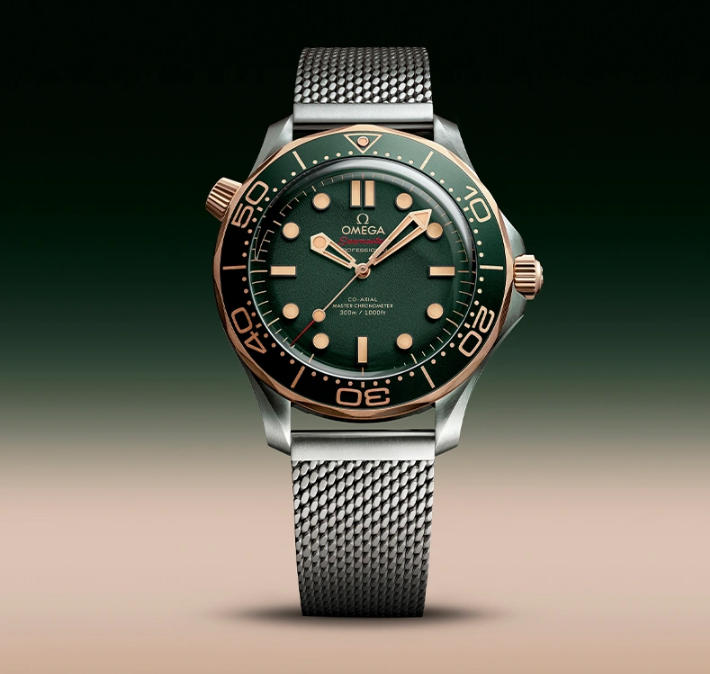
Some Seamaster Diver 300M releases make sense the moment you see them. Others take a little longer. This titanium and Bronze Gold version falls into the second group.The familiar 42mm shape is still there, along with the helium escape valve and unmistakable Seamaster identity, but almost everything around those details feels softer and less conventional. The grey surface of the titanium case, muted green dial and warm Bronze Gold accents give the watch a character that is quite different from the polished steel and ceramic combinations that have defined so many modern Diver 300M models.That is also what makes it interesting from a super clone perspective. For readers following super clone watches in the UK, this is not a model where simply copying the dial colour and case dimensions is enough. The genuine watch depends heavily on material, surface texture and subtle colour differences, and those are exactly the areas where one super clone can look noticeably better than another.
The Design Has Moved Away From the Usual Modern Seamaster Look
Omega introduced this version as part of a broader change within the Seamaster Diver 300M family. Instead of relying on the glossy ceramic dial and bezel combination that became so familiar on previous generations, the watch takes cues from the Seamaster Diver 300M 007 Edition.The most obvious change is the domed sapphire crystal. It gives the watch a slightly softer profile and reduces some of the sharp, highly polished character associated with the standard ceramic Seamaster.The green dial is aluminium rather than ceramic, and it has a sandblasted finish instead of a glossy wave pattern. The bezel insert is also green aluminium. Together, they create a flatter, more understated surface that changes noticeably depending on the light.This matters when looking at an Omega Seamaster Diver 300M super clone with a green dial. A bright metallic green or glossy ceramic-style finish may look attractive on its own, but it will not reproduce the quieter appearance of the genuine watch.
Titanium Gives the Watch More Than a Different Colour
The genuine case measures 42mm and is made from Grade 2 titanium. The mesh bracelet version also uses Grade 2 titanium, keeping the overall weight surprisingly low for a modern 300 metre dive watch.More importantly from a visual point of view, the metal has a duller grey appearance than stainless steel. Most of the case is brushed rather than polished, so light moves across it without producing the bright reflections normally associated with a steel Seamaster.This is one of the first details I would inspect on a super clone.A normal steel case coated to look grey may appear reasonably convincing in photographs, especially under soft lighting. On the wrist, however, the difference can become more obvious. Genuine titanium has its own colour and surface character, particularly around the lugs, crown guards and edges of the bracelet.Anyone comparing a titanium Omega Seamaster super clone in the UK should therefore look beyond the stated material in a listing. Weight, colour, brushing and the way the case reflects light are all useful clues.
The Bronze Gold Details Are What Give This Seamaster Its Personality
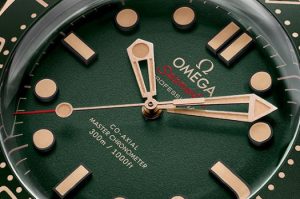
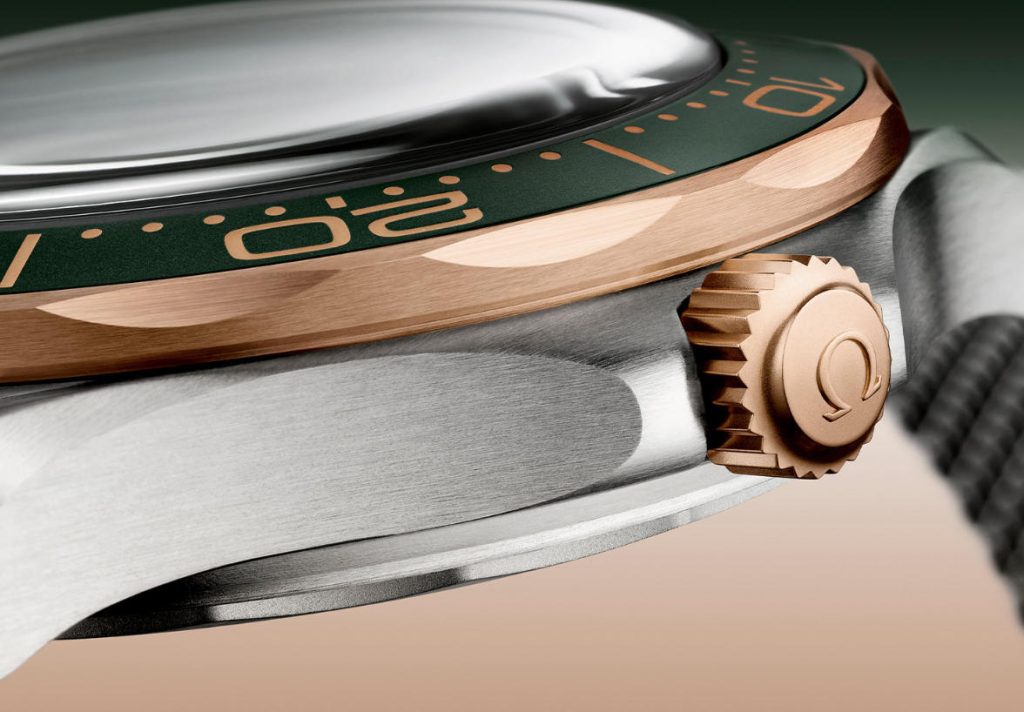
If Omega had produced the entire watch in grey titanium and green aluminium, it would have been an extremely restrained Seamaster. Bronze Gold changes that.On the genuine watch, Omega uses its proprietary Bronze Gold alloy around the bezel, crown and helium escape valve. The hands also receive a Bronze Gold coloured PVD treatment.The result is subtle rather than flashy. Against the cool grey titanium, those warmer elements give the watch just enough contrast to keep it from looking purely functional.This is another difficult area for a super clone to reproduce naturally.The tone should not look like bright yellow gold, rose gold or ordinary bronze. Too much red makes the case furniture look coppery, while too much yellow changes the character of the entire watch.For that reason, a high quality Seamaster titanium and Bronze Gold super clone should be judged partly on colour balance. The green, grey and warm gold tones need to work together. Getting each colour approximately right in isolation is not quite the same thing.
The Green Dial Is Quieter Than It Appears in Product Photos
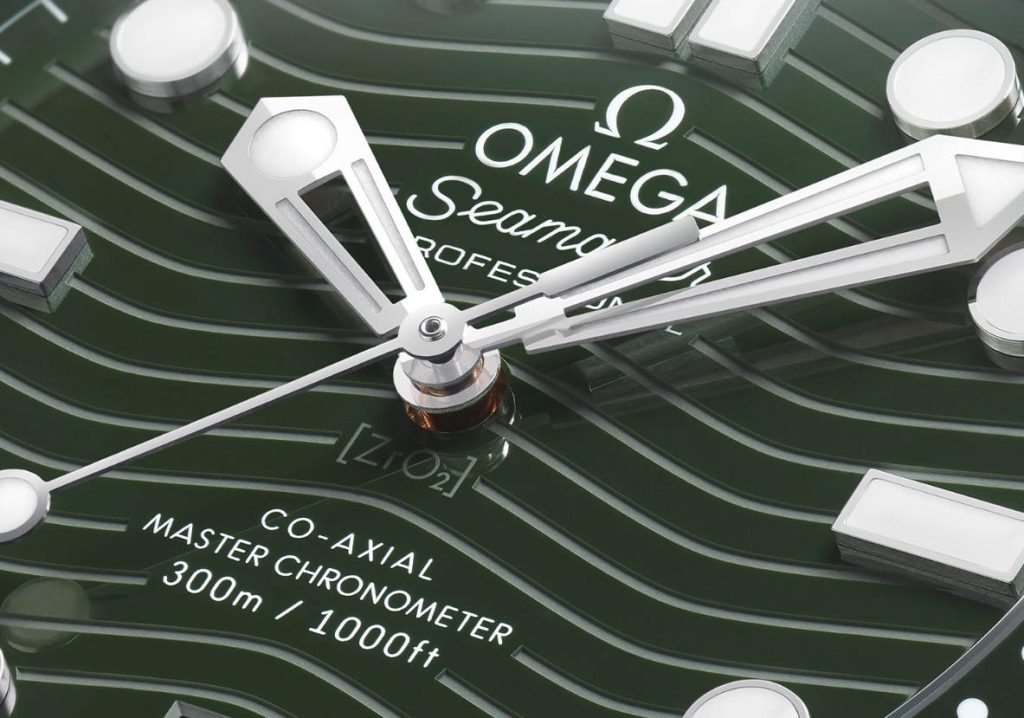
Green watches have become common enough that the colour alone no longer makes a model unusual. What separates this Seamaster is the way Omega uses green.The aluminium dial is sandblasted and relatively subdued. It does not have the glossy depth of the ceramic dials used elsewhere in the Diver 300M line. The blackened indexes sit against this textured surface and are filled with vintage-toned Super-LumiNova.There is also no conventional laser-engraved wave pattern dominating the dial. That gives the whole watch a cleaner appearance and makes the handset and hour markers more prominent.On a super clone, I would pay particular attention to four things: the shade of green, the texture of the dial, the colour of the luminous material and the thickness of the printed text.A very saturated green can immediately make the watch look different. Likewise, excessively creamy lume can turn what should be a subtle vintage influence into something artificially aged.The strongest green dial Omega Seamaster 300M super clone should therefore feel slightly restrained rather than trying to exaggerate every visual element.
The Aluminium Bezel Changes the Way the Watch Ages
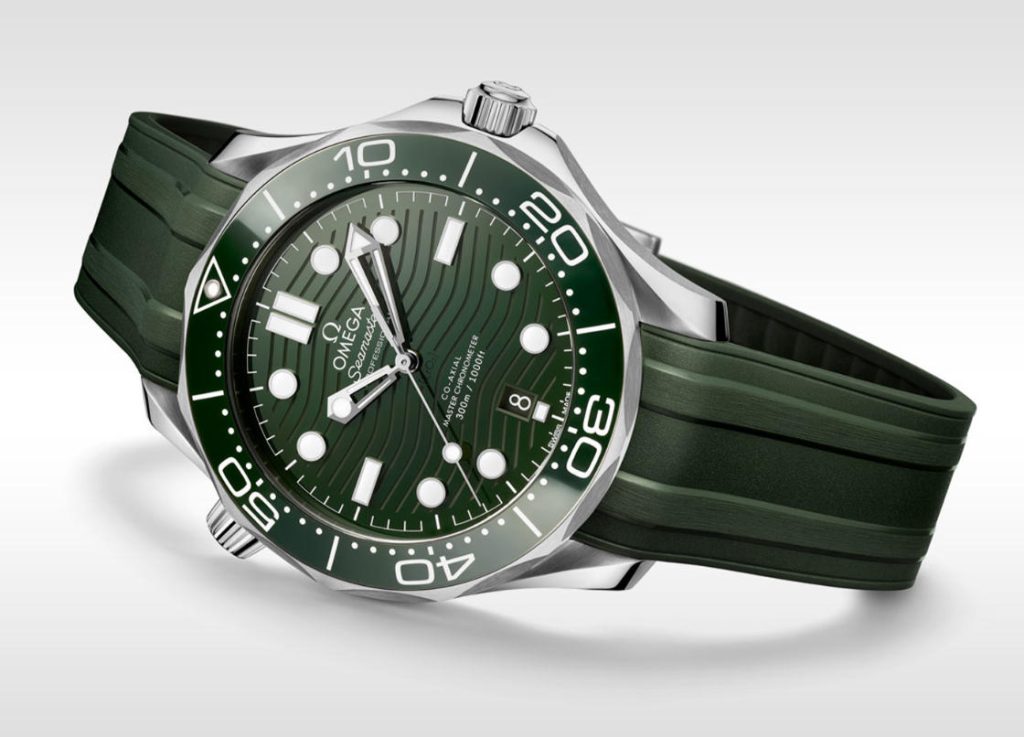
Another interesting decision is Omega’s return to aluminium for the bezel insert.Ceramic offers excellent scratch resistance and a deep polished appearance, but aluminium brings a different visual character. It looks flatter and more traditional, which works particularly well with the domed crystal and mesh bracelet.The diving scale uses vintage-coloured Super-LumiNova, allowing the bezel to match the dial rather than becoming a separate glossy component around it.This is a relatively small detail, but it is an important one when judging an Omega super clone. A ceramic-look bezel can make the watch appear more like an earlier modern Diver 300M even if the colours are otherwise correct.The font, triangle at 12 o’clock, lume colour and spacing of the numerals deserve close inspection as well. On a watch with a comparatively simple dial, bezel errors tend to stand out.
The Mesh Bracelet Is Part of the Look Rather Than an Afterthought
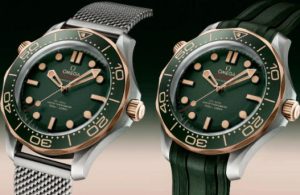
Omega offers this version with either a Grade 2 titanium mesh bracelet or an integrated green rubber strap. Both work, although they give the watch quite different personalities.The mesh bracelet strengthens the connection with the No Time To Die Seamaster. It also suits the brushed titanium case because there is very little polished metal to interrupt the grey finish.For me, this is the version that best explains what Omega was trying to achieve. The watch feels technical without looking overly modern.The rubber strap is simpler and sportier. It also allows the Bronze Gold components around the case to stand out more clearly because there is less grey metal surrounding them.When comparing a super clone Omega Seamaster with a titanium mesh bracelet, bracelet construction deserves far more attention than it normally receives.The mesh should bend naturally around the wrist rather than feeling stiff. The clasp proportions matter, as does the thickness where the bracelet meets the case. Poorly shaped end sections can make an otherwise convincing watch feel wrong as soon as it is worn.
Inside the Genuine Watch Is the Calibre 8806
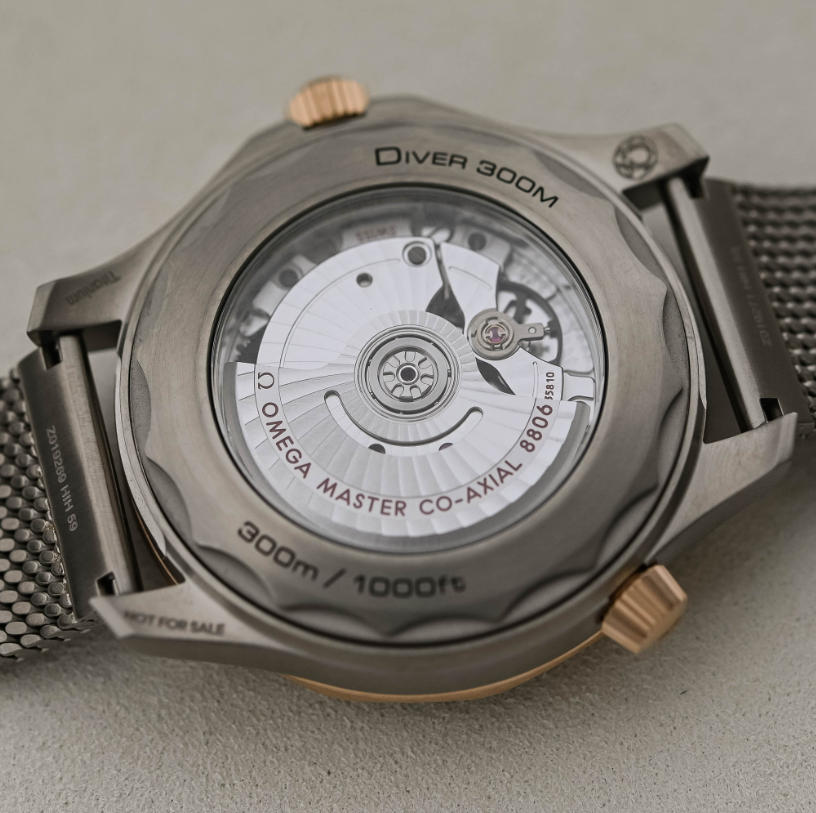
The genuine Seamaster uses Omega’s automatic Co-Axial Master Chronometer Calibre 8806. It provides around 55 hours of power reserve and can be viewed through the sapphire caseback.On the original watch, Master Chronometer certification relates to testing carried out under METAS standards, including precision and magnetic resistance.This is where the distinction between genuine and super clone needs to remain clear.A super clone may reproduce the visible layout or decoration of an Omega movement, but that does not mean it is an Omega Calibre 8806, nor does the visual resemblance provide METAS certification.Some replica movements use plates and finishing intended to create a similar appearance through the caseback. Others concentrate more on reliability than visual accuracy.Neither approach should automatically be described as identical to the genuine movement.If movement appearance matters to you, compare the rotor, bridge shapes, jewel positions, engraving and balance area rather than relying on a seller simply calling the mechanism a “clone 8806”.
Case Proportions Matter More Than the 42mm Number
The genuine watch measures 42mm across, approximately 49.7mm from lug to lug and 13.8mm thick. Those figures provide a useful reference, but measurements alone do not tell the whole story.The shape of the lyre-style lugs, the height of the domed crystal, the profile of the bezel and the position of the helium valve all influence how the Seamaster looks from an angle.This is why I would always want to see a super clone from the side before drawing any conclusions.A case can measure very close to 42mm and still appear too bulky if the mid-case is thick or the crystal sits too high. Similarly, slightly incorrect crown guards can change the character of the right side of the watch.The strongest examples usually get the overall silhouette right first and concentrate on small cosmetic details second.
What I Would Check on a Seamaster 300M Super Clone
There is no independent watchmaking standard that defines the phrase “super clone”. It is widely used in the replica market, but different manufacturers and sellers can use it for very different levels of construction.That means it makes more sense to judge the watch component by component.
- Case material and weight: Does the case actually behave and feel like titanium rather than coated steel?
- Brushing: Are the surfaces consistently finished without becoming excessively shiny?
- Green dial: Is the colour muted and is there visible sandblasted texture?
- Bronze Gold tone: Do the bezel, crown and helium valve share a convincing warm colour?
- Bezel: Does the insert look like aluminium rather than glossy ceramic?
- Crystal: Is the domed profile close to the genuine watch when viewed from the side?
- Mesh bracelet: Does it articulate naturally and does the clasp sit correctly?
- Caseback: Are the visible movement proportions reasonably close rather than simply decorated to look complicated?
These comparisons are much more useful than descriptions such as AAA, perfect or 1:1.
Why This Model Makes Sense for the Super Clone Market
The Seamaster Diver 300M has always attracted attention in the replica world because its design is instantly recognisable. This particular version adds another layer of difficulty.There is no single dramatic feature doing all the work. Instead, the appeal comes from the relationship between several quieter details: grey titanium, dark green aluminium, softly coloured lume, warm Bronze Gold and the mesh bracelet.That makes it a useful test of how far a manufacturer is willing to go beyond simply reproducing the basic Seamaster shape.A super clone that gets the logo, bezel markings and 42mm diameter right but misses the material contrast will still feel like a different watch.This is why our Omega Seamaster super clone coverage pays attention to construction and proportions as much as dial appearance. On models like this, the small differences are not secondary details. They are the design.
Genuine Omega and Super Clone Versions Should Not Be Confused
It is worth making the distinction explicit.The genuine Omega Seamaster Diver 300M uses Omega’s specified Grade 2 titanium, proprietary Bronze Gold components and Calibre 8806 Master Chronometer movement. Those details form part of the identity and value of the original watch.A super clone is an independent replica interpretation of that design. Even when dimensions and colours are visually close, buyers should not assume the materials, movement, certification or manufacturing process are the same.That difference does not prevent the replica from being interesting to compare. In fact, it makes close comparison more useful because it shows which parts of a complicated modern watch can be reproduced convincingly and which remain difficult.
I did not find this Seamaster particularly dramatic when I first looked at it. That may actually be its strongest point.The titanium keeps the case visually quiet. The green aluminium avoids the glossy look of ceramic. Bronze Gold adds warmth without turning the watch into a conventional two-tone diver. Then the mesh bracelet ties the whole thing back to one of the most distinctive modern Seamaster designs.For the super clone market, that combination creates a harder challenge than the specification sheet suggests.A convincing Omega Seamaster Diver 300M titanium super clone needs more than the right diameter and a green dial. The grey of the case, warmth of the Bronze Gold, texture of the aluminium, shape of the domed crystal and construction of the mesh bracelet all need to feel like parts of the same watch.That is what I would concentrate on rather than chasing claims of a “perfect” copy. The closer you look at this particular Seamaster, the clearer it becomes that its personality comes from small material and finishing choices rather than one headline feature.